


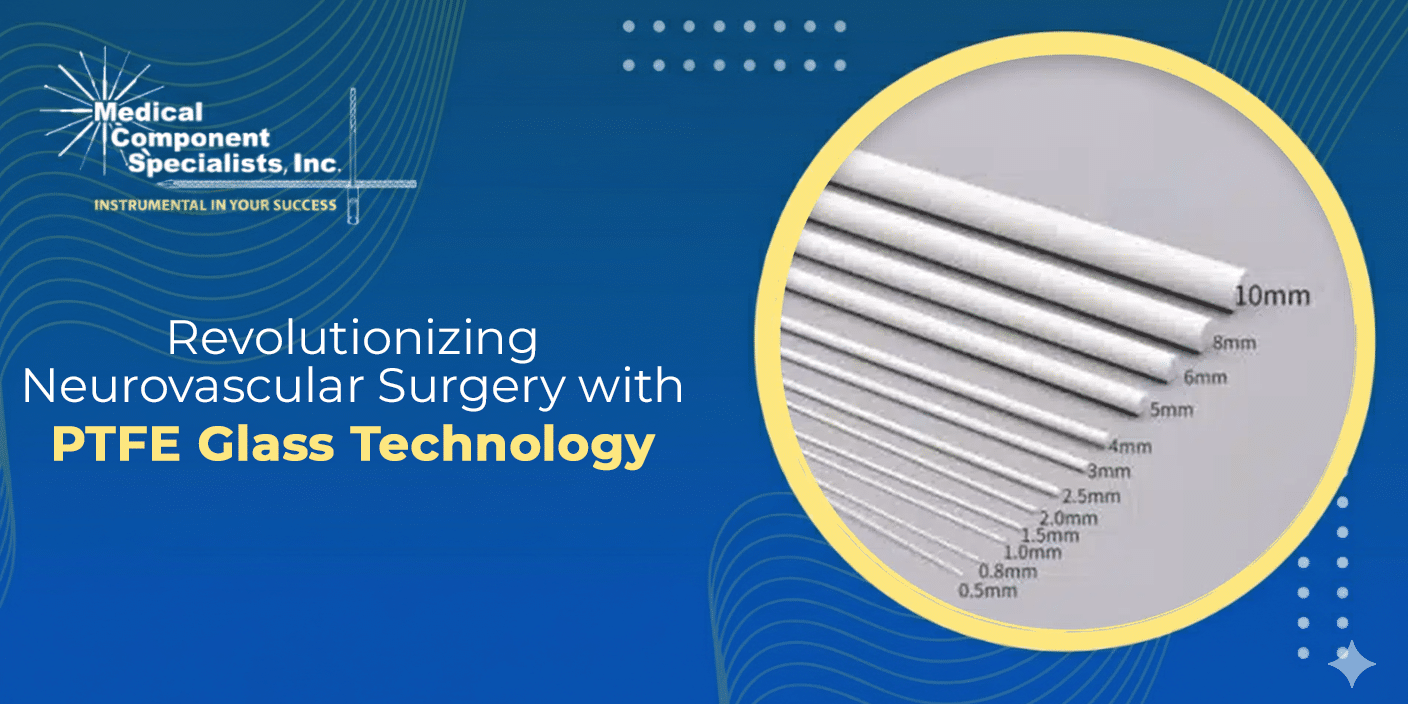
Precision Materials for Complex Anatomies
The human brain possesses the most intricate and delicate vascular network in the body. Treating conditions like acute ischemic stroke and aneurysms requires devices that can navigate these tortuous pathways with absolute precision. As neurovascular procedures continue to shift toward minimally invasive techniques, the demand for superior manufacturing materials has never been higher.
In this high-stakes field, the margin for error is nonexistent. Catheters and guidewires must be exceptionally smooth, sterile, and precise. This requirement has driven a significant industry shift toward PTFE (polytetrafluoroethylene) glass. While originally a staple in other medical sectors, PTFE glass is now proving to be an indispensable asset in the neurovascular market, offering performance that traditional materials simply cannot match.
Why PTFE Glass?
Why are leading manufacturers choosing PTFE glass mandrels over standard PTFE-coated stainless steel? The answer lies in reliability and performance:
- Zero Contamination Risk: Sterility is paramount in neurovascular interventions. Unlike coated stainless steel, which risks flaking or shedding particles during production, PTFE glass provides a monolithic, non-peeling surface. This eliminates the risk of particulate contamination, ensuring a safer final product.
- Unmatched Lubricity: The friction coefficient of PTFE glass is exceptionally low. This property allows for the easy extraction of mandrels from even the most complex, tight-tolerance micro-catheters. Manufacturers can remove the mandrel in seconds without stressing or damaging the delicate polymer lumens.
- Efficiency and Speed: Time is a critical factor in medical manufacturing. PTFE glass mandrels are not only more cost-effective than their stainless steel counterparts, but they also boast significantly shorter lead times. This allows OEMs to scale production rapidly to meet market demands.
- Thermal Stability: With the ability to withstand temperatures up to 260°C (500°F), PTFE glass remains stable during high-heat reflow and tipping processes, ensuring consistent results in catheter forming.
PTFE Glass from MCS
At Medical Component Specialists, we understand that neurovascular innovation relies on precision components. With over 60 years of grinding expertise, we supply high-quality PTFE glass mandrels that serve as the foundation for the world’s most advanced catheter systems.
Whether you are designing a novel device for stroke thrombectomy or optimizing an existing catheter line, MCS offers the speed and accuracy you need. We specialize in adding custom features—such as steps and tapers—with standard turnaround times of under two weeks. Need it sooner? Our Quick Ship Program offers a range of off-the-shelf solutions ready to ship the very next business day.
Backed by ISO 13485 certification and high-volume CNC capabilities, MCS is equipped to handle everything from initial prototyping to full-scale production. Trust in our PTFE glass technology to deliver the consistency and purity required for modern neurovascular medicine.
Contact MCS today to learn how our PTFE glass solutions can enhance your manufacturing process.

